Friday, December 14, 2012

The Scarlet Letter

I cheated a bit with The Scarlet Letter by Nathaniel Hawthorne - I listened to an audio book whilst in the car. What hit me most was the language - magnificent. I love the old fashioned prose, and that way Hawthorne  used description and metaphor.


The other thing that struck me was the intensity, and this is partially created by the way the language is used. The characters' emotions are analysed and wound out through physical characteristics - their guilt and anguish is felt by the reader so potently because pages and pages are spent on developing the turmoil of the characters.
   In general, I am starting to prefer English/European classics rather than American classics. I am not very familiar with American history. But what this book did was remind me how long America has been settled and what their beginnings were like. This book is based in the 1640s! I tend to forget that there was much settlement in America before the American revolution. Even then, America seems to become what it is today after the American civil war. This book just shows what a different place American was a few hundred years ago.
   The conservatism and extreme religious beliefs/views made me think about how different society was then and is today. It also highlighted the stark different between Australia's origins which were rough and founded with convicts, whereas the American settlement seemed to be extremely conservative. Two countries born fairly recently out of extremely different origins, and yet converging in so many ways in modern times.
   Rather than the story grabbing me particularly, this novel made me quite philosophical ...

Saturday, December 8, 2012

2012 Classics Challenge Completed


I joined by to November's Autumns's 2012 Classics Challenge late last year. Here's my original post - the goal was to read seven classics, only three of which could be re-reads. My list was:

Great Expectations
Sons and Lovers
The Master and Margarita
The Grapes of Wrath
Madame Bovary
The Happy Prince
Anna Karenina

I didn't get around to reading The Grapes of Wrath - it's still sitting here waiting. But in the process of the year, I also made a commitment to the Classics Club to read 50 classics by May 2017.
   As well as those read above, I also read the following classics this year:

The Fortunes of Richard Mahony
Rebecca
The Great Gatsby
Lady Chatterley's Lover

Here are my posts in response to the prompts posted by November's Autumn:

September Prompt
July Prompt
June Prompt
April Prompt
March Prompt
February Prompt
January Prompt

This challenge was very enjoyable, so thank-you to November's Autumn for hosting it and thinking up a prompt each month to keep us engaged. Looking back over the year as been a good activity, because although the year seems to have flown, a lot has been packed into it, and I've read a lot. It feels like a long time ago that I read some of these novels. Lots more classics reading to come ...

Wednesday, December 5, 2012

Past the Shallows

After taking 9 weeks to read the last novel, I flew through Favel Parrett's Past the Shallows in a few days. On the 2012 shortlist for the Miles Franklin award, this book was just a pleasure to read. This is another Australian novel for the 2012 Aussie Author Challenge.
   The language is simple, short and sharp. The sentences are long and descriptive when they need to be, and short and quick to keep the pace going when they need to. When the writing is imitating the thoughts of the young boys that are the main characters, the sentences are short and simple. The language leaves so much unsaid, and yet the characters are so vivid.


Aunty Jean is the only living female in the story. She appears both cruel and caring, self-centred and yet generous, unstable but intuitive. She knows how the boys live, and how their father treats them, and yet she doesn't do more. She buys groceries for them once during the story, and lets them starve otherwise, when she knows their father doesn't provide for them. She dissolves into tears very quickly, but then she takes Joe's safe haven away from him by contesting the Grandfather's Will and selling the house. She must have her own reasons, but she is a very complex character. The image of her that I get is of an older women, fairly large, and wearing oversized cotton dresses. There is not much description of her at all.
   It is interesting that the boys' father is only ever referred to as 'Dad' throughout the novel. I think we learn his full name once, but it doesn't have much impact. He is a faceless monster.
   Maybe Aunty Jean is afraid of Dad, which is why she doesn't interfere more. Maybe the whole community is afraid to do something - it must have been set in time some years ago, otherwise someone would get child protective services to visit (or the Fisheries staff would have made a report to child protective services after their visit).
   It is suggested that the ocean is a metaphor for Dad - that Harry fears it, and Miles both loves and hates it. Until I read this suggestion, it didn't occur to me. I thought that the way the boys related to the ocean reflected more on their own characters. Harry is more tentative and sensitive - he is not daring and rebellious like the older boys. Miles is the typical middle child, trying to please everyone - he wants to be free, but he feels obligated to look after Dad and look after Harry.
   The piecing together of memories and events is done very skilfully by Favel Parrett, and although a lot is left unresolved at the end (about Dad, mainly), is doesn't really matter. You only care for the boys, and the reader knows that all will be well.

Sunday, December 2, 2012

The Fortunes of Richard Mahony

This is the novel that took me the last 9 weeks to read - it's 841 pages and really consists of three volumes; Australia Felix, The Way Home, and Ultima Thule. The Fortunes of Richard Mahony is written by Henry Handel Richardson, which is the pen-name of Ethel Florence Lindesay Richardson who was born in Melbourne, Australia in 1870. So I read it as part of the 2012 Aussie Author Challenge, but it could really be a novel for the 2012 Classics Challenge or the 2012 Australian Women Writers Challenge.


I will use extracts from the Afterword by Dorothy Green:
   "The Fortunes of Richard Mahony is at once one of the simplest books to read and one of the most complex and profound: a fusion of the domestic and the sublime which has no parallel ... It is first of all an absorbing account of a marriage, of a union between a man and a young girl, who grow and change, who seem for most of their lives to be polar opposites, each with a particular 'wisdom' which contradicts the other's. Yet at the end, we find that they have exchanged that wisdom, each has learnt painfully what the other knew, and the underlying bond, the bedrock affinity between them, is re-affirmed.
   "From one point of view ... The Fortunes of Richard Mahony is a novel about money, about the struggle to get a living, or to grow rich. Set against the background of the great goldmining boom of the mid-nineteenth century, money is a bone of contention between husband and wife, even through their brief period of great prosperity". It is here that I deviate, because whilst this novel was set about 150 years ago, Richard Mahony was struggling with many of the traits that the modern Generation Y is accredited with - need for money, materialism, restlessness, and impatience towards advancement in life. It was really interesting to see these traits so described in a long-ago generation that is looked back upon as somewhat of a golden era, with very different worries from today. In fact, their worries were the same as ours.
   "Marriage and money: these are subjects of abiding interest to all human beings. But there is a third one linked with them in this novel: the circumstance of being an emigrant, of being homeless, of feeling alienated ... The first volume, Australia Felix, concerns the bustling commercial life of a society precariously based on mining, whose members are struggling towards financial security. Its movement it towards settled order from chaos; its image is earth, the stable element which nurtures life if it is not abused. The second volume, The Way Home, reveals the security is an illusion, no sooner acquired than lost, or if not lost, then regarded as irksome. Its image is the sea, the dangerous unstable element which Mary dislikes and Richard loves. Its movement is towards instability, the breaking up of established patterns. it also demonstrates the truth of Mary's assertion: 'But people are the same everywhere!'. The stuffy provincialism which drives Richard back to England is a habit of mind, not a geographical reality, a habit even more pronounced in the home country than in the colony. In the first volume and for much of the second we are conscious of the social background to the lives of the central characters, but the author gradually closes in on them as Richard's alienation progresses, until in the third volume, Ultima Thule, the narrative concentrates almost exclusively on the states of mind of Richard, Mary and their son Cuffy.
   "The secret of the power of The Fortunes of Richard Mahony to move to tears so many of its readers (including me) lies hidden in the mystery of imagination ... To try to read The Fortunes of Richard Mahony with full attention is not so much a task which every educated Australian might be expected to perform, but an unforgettable experience of the profundities which sustain the simplicities of existence; an experience which shakes and strengthens the reader who yields himself to it, and which endows the common dust with a tragic grandeur."
   That says it all. Exquisite.

Apologies

I haven't posted anything throughout October or November 2012. I have a good reason, but I apologise anyway, because I value my followers and fellow bloggers more than my ego.


   I bought a business, so I am part of the way to achieving my goals. Though being a business owner will make is difficult to achieve my other goals - of being an avid reading and becoming a published author - because there is just so little time in the day.


   So, it took me nine weeks to read the novel that I started just before I bought the business. I will write a post about ti shortly. It was a lengthy novel, but it's the longest I've taken to read a book, and I must say that I am glad to finally have finished it and to be able to move on!
   More posts to follow ...

Sunday, September 23, 2012

A Woman of Independence

As part of my commitment to the 2012 Australia Women Writers Challenge, I picked up A Woman of Independence by Kirsty Sword Gusmao.
   Kirsty is the young Australian wife of the first president of the world's newest country - East Timor.
   This was a very informative book - I was interested in it intellectually, but I had to force myself to read it. Unfortunately, I didn't find the story-telling to be very engaging. The reason I persisted is because my husband was in the INTERFET peace keeping force in 1999, and again involved in 2006 during the second presidential election.


The book was published in 2003, so it didn't detail the years of Kirsty and Xanana Gusmao's lives during Xanana's presidency. I would have liked to know how they dealt with the problems in 2006, and Xanana's transition from president to prime minister.
   I was more interested in Xanana's story, and that of his imprisonment. The relationship that developed between Kirsty and Xanana (whilst he was in an Indonesian prison) was interesting, with their struggles and their joint passion and drive for East Timor. Now that the country has settled, I'd also like to know how their family has grown and what their sons want to make of their lives.
   The book also awoke a desire in me to visit East Timor as a tourist, and try to help their country in some small way. Maybe in the next couple of years I will get there for a holiday.

Friday, September 14, 2012

The Five Greatest Warriors

As part of my commitment to the 2012 Aussie Author Challenge, I read another book by Matthew Reilly this week. I read The Five Greatest Warriors.
   It's my second Matthew Reilly book, since I read Scarecrow earlier this year.


Reilly's books are very easy to read, involve little thinking, and they're fast paced.
   I didn't realise that The Five Greatest Warriors was the final book in a trilogy - but it didn't matter. The story stood alone, and had enough references and explanations to what had happened in the past to be able to read on. Like I said above, Reilly's books are not complex, and don't involve much thought.
   This story could have been filled with exactly the same characters as Scarecrow. Reilly is not god at character development. They are cardboard cut-outs. But there is so much action that there is not much time to get to know the characters anyway - they are just parts of the action. The lack of character development, though, causes the reader to have no emotional connection with them.
   Unlike when I read Scarecrow, however, I had an emotional connection with the theme of this story. It was much more interesting than an international bounty hunt. The Five Greatest Warriors was an elaborate 'game' to save the world, involving ancient artefacts, links to religion and ancient civilisations, meteorology and astronomy. It would have taken Reilly some time to research.
   This book played like an action movie in my mind, with characters with unreal weapons and technologies, and amazing displays of speed and strength.

Tuesday, September 11, 2012

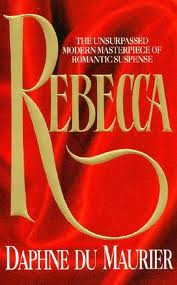
Rebecca by Daphne du Maurier

Last week I finished reading the classic novel Rebecca by Daphne du Maurier, published in 1938, as part of my commitment to the 2012 Classics Challenge. I had not heard of this novel until I saw a review of it on First Tuesday Book Club. They are very careful not to give away too much of the story, and the story certainly exceeded my expectations. In fact, it's been one of my favourites this year!


Rebecca is the name of the first wife of Maxim de Winter, who is dead. The narrator is the young second wife, whose name we never learn.
   The story beings with the second Mrs de Winter telling how she and her husband live a quiet, secluded life, avoiding their acquaintances and virtually hiding from the past. It seems like they are afraid.
   Then the second Mrs de Winter goes back to tell of her meeting Maxim de Winter and returning with him to his estate, where she lives in the shadow of the dead first wife, and seemingly can't live up to the expectations of her.
   Because it is narrated by the second Mrs de Winter, we are thrust into her adolescent emotional turmoil, and see the story from her point of view until the whole thing unravels before her, and then we learn the truth when she does.
   Mrs Danvers, the main housekeeping and Rebecca's former maid, is exceedingly jealous that her mistress could be replaced, and sets out to undermine the new Mrs de Winter and play mind games with her. Mrs Danvers is a great character.
   The novel is more of a suspense story than a romance, which I wasn't expecting. It could even be considered a ghost story, although there is no physical presence of the ghost. It is quite clever, and the writing is lovely.

Wednesday, September 5, 2012

September Prompt - Classics Challenge

I read Anna Karenina last month, and for the September Prompt of the Classics Challenge is to select a piece of music that reflects the book.
   I cheated a bit. I first thought that the music would have to be classical, because of the period in which the story was set. Then I thought maybe an opera piece would be perfect, because they went to the opera a couple of times in the novel. But instead, I looked up the soundtrack for the 1997 Anna Karenina movie on Wikipedia.


   That article gave me the perfect piece, which I immediately downloaded on iTunes: Tchaikovshy's Symphony No. 6, "Pathetique". It contains several movements, some with manic allegros reflecting Anna's mood, and then really dark periods of exaggerated tragedy. It's also really long!
   Here's a version from YouTube:


Thursday, August 30, 2012

Lovesong

Back to reading for the Aussie Author Challenge, I read Alex Miller's Lovesong this week. I raced through it. It was satisfying. It wasn't drama-filled; it was just a story about life and love. Winner of 2010 Age Book of the Year, it was a lovely piece of writing.


I have no criticisms, but I'm not gushing about it either. I really don't know what to say, except that it has left me feeling calm and reflective, and I slept really well after I finished it last night!
   It did raise a couple of questions about the narrator, Ken, who is a novelist himself. He listens to the story of John and Sabiha Patterner, and decides he is going to write a novel about their story. However, at the end, John says he is writing the story himself. Ken is jealous, and doesn't believe John will write it well or complete it. He gets a bit competitive, and it raised a moral question for me - should a writer write someone else's story without their permission? If a writer writes a friend's story without their permission, will the friendship last? At what point does a story become historical fiction - do all the main characters have to be dead?

Sunday, August 26, 2012

Anna Karenina

I have been absent for about a month, and with good reason: it has taken me 4 weeks to read Leo Tolstoy's Anna Karenina. I was surprised at how easy it was to read, and that may have something to do with the translation or it may not. Firstly, each part is separated down into chapters that only last for 4 pages or so; so you really feel like you're making progress when you're reading. Secondly, the pace and flow of the novel felt surprisingly modern. I say this when comparing Anna Karenina with Doctor Zhivago, which was writing much later and was much more difficult to read.


All I knew about Anna Karenina before I started reading it was that it was considered one of the greatest love stories ever written. I didn't know much else, except that she committed suicide. On reading it, it is far more complex that I had ever expected. Anna's love story with Vronsky really didn't touch me - it felt immature, shallow and selfish (like the two characters). It was Kitty and Levin's love story that really stole the whole show for me. I would flick through the chapters about Anna just to pick up Levin's story again.
   If I were naming the novel, I certainly wouldn't have chosen 'Anna Karenina'. But reflecting on that point, Anna Karenina's love story is like a smoke screen for the real, rich and mature love that Levin and Kitty develop. Maybe Tolstoy wanted the reader to focus more on Anna, and for her brilliance and beauty to overwhelm the other aspects of the story. For me, however, Anna's beauty and charm was like the perfect red skin on a rotten apple.
   Anna's relationship with Vronsky wasn't ill-fated. She drove it that way, with her insecurities and bi-polar type mood swings. Because my reading of Madam Bovary was so fresh, I kept drawing similarities between the two women. Vronsky, a shallow and self-centred man with little emotional maturity, didn't know how to deal with Anna. A pity there wasn't couples' therapy back in Russia in the 1870s!
   Levin's character, however, was fascinating. He is complex, deep-thinking, progressive, yet holds onto his values; he is scientifically trained which causes him to question faith all the way through the novel, but at the end he finds faith and it calms him tormented soul. His torment over the birth of his son was also fascinating - he excepted to instantly feel an overwhelming love, but instead he felt repulsion and pity. I really appreciated how candid Tolstoy was through Levin's thoughts and feelings.
   It is a real achievement to finish this novel, and I recommend it to committed readers who haven't tried. It's not as difficult as it first appears!

Sunday, July 29, 2012

A Room at the Top

This is a re-read for me, but I'm struggling to find books on my shelf for the Aussie Author Challenge. I first read this book in 2010, after seeing Heath Ducker speak at a breakfast seminar at the National Family Law Conference in Canberra. Heath didn't bring any of his books with him, so I went out and bought the book at lunch time. I was lucky enough to see him in a lecture later that afternoon, though I hadn't expected he would attend any of the lectures, since he's not a family lawyer. So, I think I embarrassed him, by running up to him and asking him to sign the book. I don't care - whatever it takes!


Heath was a good speaker, for a young man. He was engaging and honest. Inspired by his speech, I read his book really quickly, the first time. It left me feeling like I was ignited with compassionate energy to do something for those less fortunate. I contacted Youth Insearch, which had helped Heath so much in his life, and got a very ambivalent response. It wasn't encouraging. I got the pattern to knit the love wraps, and did a few of those. Then I moved to Sydney and got caught up with the craziness of just trying to survive in this fast-paced city.
   The book flows really well. It follows Heath through his early years, through his battles, and then through his achievements as a young man. He grew up in 'abject poverty, in a dilapidated government house with shattered windows and holes in the floor through which weeds climbed. He lived with his single mother and nine siblings, conceived with many different fathers. Most days they had nothing to eat but breakfast cereal. Just when it seemed things wouldn't get worse, Heath was sexually abused by the father of his closest friend.' He ended up as a young lawyer at a top-tier law firm in Sydney, though I think he now works in a government department.
   As I said, I raced through it when I read it first.
   On the second read, I took my time. I knew where it was going, so I reflected on the messages a bit more. I also don't think that the book conveys Heath's real voice. It uses some fairly emotive language, and I think it is written with some deep insight and reflection that may not have been possible without some heavy editing.
   I do think it's the best book Australian true story, after Kinglake-350, that I have read.
  This time, rather than leaving me with an intense desire to do something straight away, I have been more reflective myself. A lot of what Heath believes in - in a supportive community, and committed individuals providing special services - I don't think I can achieve whilst living in Sydney. I have no sense of community at all, here. That's part of the reason why my husband and I have decided to move back to the country in the coming months. Working in a small firm, actually doing grass-roots law, I will be helping individuals with real problems. Currently, I have no effect on anyone's lives whatsoever. I am not practicing the kind of law that I want, at the moment. I will be returning to doing family law, to representing children in child protection matters, to representing criminals in petty crimes, and representing families on the death of their loved ones. I can't wait. I will be a member of a small community, and I will participate and aim to make the community a better place. I hope that I will eventually participate in the Aunties and Uncles program that Heath found so useful, but if not, I may be able to do some short-term foster care or respite care for needy kids.
   Everyone should read this, if you have any concern for the decline of community and society.

Friday, July 27, 2012

The Shifting Fog

As part of the Australian Women Writers' Challenge, I read The Shifting Fog by Kate Morton this month. There was no hint of an Australian theme in this novel - I had thought it would be about one of the grand settlers households in country New South Wales. Instead, it was about an old English manor with all its tradition.


The style jumps around a little in this book. Some of it is written as a film script. Some of it is written like a letter. Most of it is narrated by Grace in the first person, but sometimes it is hard to tell whether she is in the present (1999) or in the past.
   The story starts on the eve of a glittering society party in the roaring 20s (1924), by the lake of a grand English country house, a young poet takes his life. The only witnesses, sisters Hannah and Emmeline Hartford, will never speak to each other again.
   Grace Bradley, 98, one-time housemaid of Riverton Manor, is visited by a young director making a film about the poet's suicide. Ghosts awaken and memories, long consigned to the dark reaches of Grace's mind, begin to sneak back through the cracks. A shocking secret threatens to emerge; something history has forgotten but Grace never could.
   Then Grace starts telling the story from the beginning, further back before the war, when the sisters were still children, and she had just been employed at Riverton.
   Although the story was quite tragic in many aspects, because the main focus was Grace, I found it very uplifting. She kept a secret that wasn't hers, because of the duty she felt for the family she worked for. However, the novel unwraps lots of little secrets about Grace's life, and also about the connections between characters that aren't evident at first. I thought that everything tied together very neatly, and I think that love won in the end. It was very hopeful.
   The first world war was a catalyst for enormous social and cultural changes. I was really interested to see how those changes affected a large manor house, and those downstairs in particular. I had never thought of it before. I was so intrigued that I bought and watched the first two series of Downton Abbey straight away, to preserve the feeling of the upstairs/downstairs relationships and interactions.
   I am really looking forward to reading more Kate Morton novels.

Sunday, July 22, 2012

The Great Gatsby

I think a lot of people think that they know the story of The Great Gatsby by F. Scott Fitzgerald, but in fact they don't. I thought it was about an eccentric old rice guy taking a young hopeful under his wing, with a lot of extravagance and an element of magic. I had the image of the circus ringmaster in my head.
   It's nothing like that.
   It's a love story, and a tragedy. It's a short moment in time that has left a great impact on the main character and narrator. It unfolded because of an accident and a mistaken identity. And Gatsby himself is a young man.


The Penguin version that I read had about 50 pages of analysis by way of introduction. I think it was somewhat over-analysed as a study on American class and society (old money v new money/east v west).
   I think it was a doomed love story. Gatsby wanted to amass wealth to try to prove his worth to the wealthy woman that he loved. He didn't think he would have a chance with her unless he was rich. He probably didn't, because she was a materialistic snob. In any event, when she discovered that his money was from bootlegging, it wasn't good enough for her then either. In another way, it was a doomed love because Gatsby only loved her whilst she was unobtainable - he yearned from a distance. When she was sitting in his house with him, or at his party, she wasn't what he imagined her to be.
   Nick Carraway, the narrator, is very disillusioned by the end of the story, even tainting his story-telling on the way through. He is sick and tired of the snobbery, the materialism, the shallow and the false. He is disgusted by a lot of what he sees. He has become a cynic, and I think he's given up on believing in the good of people.

Friday, July 20, 2012

July Prompt - A Classics Challenge

This month, November's Autumn has suggested that we choose one of the classics that we have read recently that has left a lasting impression.

My most recent classic was Madam Bovary. The lasting impression, other than the selfish, shallow, materialistic and immature character of Madam Bovary herself, the biggest impression in this book is the agonisingly slow suicide. It's about the longest lasting and drawn out suicide in literature, I think.


This is not really as I picture Madam Bovary, because she had dark hair and was probably stunning, even as she was dying. 'She rolled her head with a gentle, anguished movement, trying to open her jaws all the while as though she had a heavy weight on her tongue. At eight o'clock the vomiting began again ... she began to groan, feebly at first. A violent shudder went through her shoulders, she turned whiter than the sheet she was clutching in her fingers. Her wavering pulse could hardly be felt at all now ... drops of sweat stood on her blue-veined face, which looked as if it had been petrified by exposure to some metallic vapour. Her teeth chattered, her pupils were dilated, her eyes stared vaguely about her ... little by little her groans grew louder. A muffled scream broke from her ... she was seized with convulsions ...' This goes on for 12 pages!
 
I've said it before: this story was certainly not what I was expecting!